
How AI is Revolutionizing Marketing in 2026: What Smart Business Owners Are Doing Now

How AI is Revolutionizing Marketing in 2026, AI marketing trends 2026, AI for business marketing
Table of Contents
Home /Digital Marketing /How AI is Revolutionizing Marketing in 2026: What Smart Business Owners Are Doing Now

How AI is Revolutionizing Marketing in 2026 Key Takeaways

How AI is Revolutionizing Marketing in 2026 is not a distant trend—it is unfolding right now, transforming how businesses connect with customers, optimize campaigns, and scale operations.

  • AI marketing trends 2026 show a pivot from generic automation to hyper-personalized, predictive, and voice-driven campaigns that feel human.
  • Businesses using AI for business marketing report up to 40% higher conversion rates by leveraging real-time customer data and generative AI content.
  • From AI SEO strategies to AI chatbot marketing , the tools are now affordable enough for small businesses and startups to compete with enterprise giants.
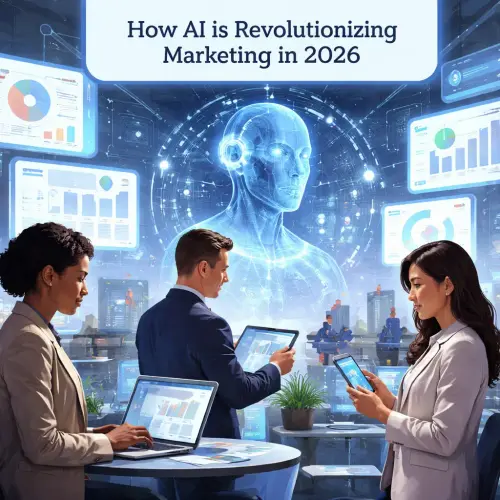
How AI is Revolutionizing Marketing in 2026

How AI is Revolutionizing Marketing in 2026: The Core Shift

How AI is Revolutionizing Marketing in 2026 marks a fundamental shift from reactive to proactive marketing. Instead of analyzing past data to guess future behavior, machine learning in marketing now enables brands to predict customer needs, automate personalized messaging, and optimize every touchpoint in real time. The days of batch-and-blast email campaigns are fading. In their place, AI marketing automation tools orchestrate individualized journeys that adapt based on clicks, opens, purchases, and even sentiment.

For smart business owners, this means they can now deploy AI-driven customer experience strategies without needing a data science team. Platforms like HubSpot, Jasper, and ChatGPT Enterprise bundle predictive modeling, content generation, and analytics into one dashboard. The result? AI for business marketing is no longer a luxury—it is a baseline requirement for staying relevant.

Generative AI Marketing Becomes the Norm

Generative AI marketing has matured. In 2026, AI writes high-quality blog posts, scripts for short-form video, product descriptions, and even ad copy that resonates emotionally. Tools like Jasper, Copy.ai, and Writesonic now include brand voice training, so content feels consistent. Smart owners use these for AI content marketing 2026 to produce at scale while human editors refine the final output. For a related guide, see Digital Marketing in Cambodia (2026): What Actually Works.

AI-Powered Advertising at Scale

AI-powered advertising platforms like Meta Advantage+, Google Performance Max, and Amazon DSP use machine learning to automatically adjust bids, creatives, and audiences. Business owners see higher ROAS because the AI tests thousands of combinations in minutes—something no human team can match. This is one reason AI digital marketing tools are now standard for eCommerce and SaaS brands.

AI Social Media Marketing

AI social media marketing goes beyond scheduling. Platforms like Buffer, Hootsuite, and SocialBee now offer AI-driven content suggestions, optimal posting times, and even auto-reply for common customer queries. Smart business owners use AI automation for businesses to maintain an active presence without burning out their teams. For Cambodian entrepreneurs exploring AI social media Cambodia, these tools make it possible to manage multiple channels with minimal staff. For a related guide, see Get More Customers with ChatGPT-Powered Marketing in Cambodia.

Smart Business Owners Using AI: Real-World Applications

What sets smart business owners using AI apart is their focus on integration, not isolation. They do not treat AI as a separate department. Instead, they weave it into their existing workflows. Here is how they apply it across critical marketing functions.

AI SEO Strategies That Drive Rankings

AI SEO strategies in 2026 rely on tools like Surfer SEO, Frase, and Clearscope that analyze top-ranking pages and suggest content gaps right in the editor. Can AI improve SEO rankings? Yes, when combined with human oversight. AI identifies keyword clusters, entity optimization, and internal linking opportunities faster than manual research. For Khmer-speaking audiences, AI និង SEO helps local businesses optimize content in the Khmer language, improving visibility in Cambodian search results.

AI Chatbot Marketing for 24/7 Engagement

AI chatbot marketing now powers conversational commerce. Advanced chatbots—powered by models similar to GPT-4—hand complex queries, recommend products, and even upsell. AI chatbot Cambodia implementations show that small retailers can use simple no-code tools like Tidio or ManyChat to answer common questions in Khmer, freeing staff for higher-value tasks. តើ AI chatbot មានអត្ថប្រយោជន៍អ្វី? It reduces response time from hours to seconds and captures leads even when your team is offline.

AI Lead Generation on Autopilot

AI lead generation tools like Leadfeeder, Albacross, and ZoomInfo’s intent data help business owners identify anonymous website visitors and score leads by purchase intent. Combined with AI email marketing platforms like Mailchimp and ActiveCampaign that send dynamically personalized emails, conversion rates climb. AI business growth strategies now begin with data, not intuition.

Is AI Replacing Marketers? The Human-AI Partnership

The fear persists: Is AI replacing marketers? The reality is more nuanced. AI eliminates repetitive tasks—drafting reports, resizing images, scheduling posts—but it does not replace strategic thinking, emotional intelligence, or brand storytelling. The best outcomes come from a partnership: AI handles the data, and humans provide the creative direction. What are the benefits of AI in marketing? Reduced costs, faster execution, and deeper customer insights, not a complete replacement of the marketing team.

AI Branding Strategies: Keeping Your Voice Unique

AI branding strategies focus on consistency. Tools like Brand24 and Mention monitor brand sentiment across social media and news. AI can suggest tone adjustments based on audience reaction. However, the core brand story must still come from humans. Smart owners use AI to amplify, not replace, their unique voice.

AI Marketing Case Studies: Proof in Numbers

Real-world AI marketing case studies illustrate the impact:

IndustryAI ApplicationResult
eCommerce FashionAI product recommendations + email personalization32% increase in average order value
SaaS StartupAI chatbot for lead qualification60% reduction in response time
Local Service Business (Phnom Penh)AI social media Cambodia with automated posting and replies45% growth in Facebook engagement in 3 months
Content AgencyAI content marketing 2026 with generative AI for client blogsProduced 4x more content without hiring new writers

These AI marketing case studies show that AI for small businesses is not only possible but highly effective. Is AI marketing affordable for startups? Many tools offer free tiers or starter plans under $50 per month, making AI marketing for startups accessible from day one.

AI Sales Funnel Optimization: Turning Leads into Customers

AI sales funnel optimization uses predictive analytics to identify which leads are ready to buy. Tools like Salesforce Einstein and HubSpot Predictive Lead Scoring analyze behavior patterns—email opens, page visits, form submissions—and rank prospects. Marketers can then prioritize high-intent leads, avoiding wasted effort on cold contacts. Combined with AI-driven customer experience personalization at every stage, the funnel narrows faster and conversion rates rise.

AI in eCommerce Marketing: Personalization at Scale

AI in eCommerce marketing powers dynamic pricing, personalized product recommendations, and automated email flows based on browsing history. Platforms like Shopify use AI to suggest products in cart abandonment emails, while Amazon’s recommendation engine drives 35% of its revenue. For smaller stores, apps like Octane AI and Nosto bring similar capabilities without the enterprise price tag.

AI for Small Businesses and Startups: Practical First Steps

How can small businesses use AI? Start with one pain point. If you struggle with content creation, try an AI digital marketing tool like Jasper to draft social posts. If customer inquiries overwhelm your inbox, set up a simple AI chatbot marketing widget on your website. If you want to automate email follow-ups, use AI email marketing features in Mailchimp. The key is to start small, measure results, and expand gradually.

For Cambodian entrepreneurs exploring AI marketing Cambodia, local resellers and Khmer-language interfaces are increasingly available. បច្ចេកវិទ្យា AI សម្រាប់ទីផ្សារ is growing fast, and early adopters are already seeing advantages over competitors still using manual methods.

Risks of AI in Marketing: What to Watch For

What are the risks of AI in marketing? Over-reliance without human oversight can produce tone-deaf content, data privacy issues, and algorithmic bias. Brand reputation can suffer if an AI chatbot gives incorrect answers. Smart business owners mitigate these risks by setting clear guardrails: review all AI-generated content before publishing, keep customer data secure by using reputable platforms, and maintain a human escalation path for chatbot conversations. AI automation Cambodia adopters should also ensure tools comply with local data protection laws.

Useful Resources

Explore these reputable sources to deepen your understanding of How AI is Revolutionizing Marketing in 2026:

Frequently Asked Questions About How AI is Revolutionizing Marketing in 2026

What is AI marketing in 2026?

AI marketing in 2026 refers to the use of artificial intelligence technologies—including machine learning, natural language processing, and generative AI—to automate, personalize, and optimize marketing activities across channels. It is no longer a future concept but a practical tool used daily by businesses worldwide.

How are businesses using AI for marketing?

Businesses use AI for content creation, personalized email campaigns, predictive lead scoring, chatbot customer service, social media automation, dynamic ad bidding, and real-time analytics. The applications span B2B and B2C sectors alike.

Why is AI important for digital marketing?

AI is important because it enables marketers to process large volumes of data quickly, predict customer behavior, personalize at scale, and automate repetitive tasks. This leads to higher efficiency, better ROI, and a more relevant customer experience.

What are the best AI marketing tools in 2026?

Top tools include Jasper for content generation, HubSpot for CRM and automation, Surfer SEO for content optimization, ManyChat for chatbots, and Adobe Sensei for analytics. The best tool depends on your specific marketing needs and budget.

How can small businesses use AI?

Small businesses can use AI for drafting social media posts, automating email follow-ups, answering common customer questions with chatbots, and analyzing basic customer data. Many tools offer free or low-cost entry points.

Is AI replacing marketers?

No, AI is not replacing marketers. It is automating routine tasks and providing data insights, but creative strategy, brand storytelling, and human empathy remain uniquely human strengths. Marketers who learn to work alongside AI will thrive.

What are the benefits of AI in marketing?

Benefits include increased efficiency, cost savings, faster campaign execution, deeper customer insights, 24/7 customer engagement, and the ability to deliver highly personalized experiences at scale.

How does AI improve customer engagement?

AI improves engagement by delivering relevant content, offers, and responses based on real-time customer behavior. Personalized emails, chatbot conversations, and tailored website experiences all contribute to higher engagement rates.

What is generative AI in marketing?

Generative AI in marketing refers to models that create original content—text, images, video scripts, or audio—based on prompts. It is used for writing blog posts, ad copy, social media captions, and even generating product images.

Can AI improve SEO rankings?

Yes, AI can improve SEO by helping with keyword research, topic clustering, content optimization for search intent, internal linking suggestions, and analyzing competitor strategies. Tools like Surfer SEO and Frase are specifically built for this purpose.

How do smart business owners use AI?

Smart business owners integrate AI into existing processes: they use it to automate lead capture, personalize email sequences, optimize ad spend, manage social media, and analyze customer feedback. They do not replace their team but augment it.

What industries benefit most from AI marketing?

eCommerce, SaaS, travel, finance, healthcare, education, and retail see the strongest benefits. However, any industry with customer-facing marketing can gain from AI-driven personalization and automation.

Is AI marketing affordable for startups?

Yes, many AI marketing tools have free tiers or low-cost monthly subscriptions. Startups can begin with a single tool for a specific need—like chatbot or content writing—and scale as they grow.

How can AI automate social media marketing?

AI automates social media by scheduling posts, suggesting relevant hashtags, generating captions, monitoring brand mentions, and even auto-replying to common questions. Tools like Buffer and Hootsuite offer built-in AI features.

What are the risks of AI in marketing?

Risks include over-automation leading to impersonal interactions, data privacy concerns, potential for biased algorithms, and dependence on tools that may produce errors. Proper oversight and data governance can mitigate these risks.

How is AI changing customer experience?

AI changes customer experience by enabling instant, personalized, and proactive service. Chatbots provide 24/7 support, recommendation engines suggest relevant products, and predictive analytics anticipate customer needs before they arise.

What is the future of AI marketing ?

The future of AI marketing includes even deeper personalization, voice and visual search optimization, autonomous ad buying, and fully automated customer journeys that adapt in real time. Human oversight will remain essential for creative direction.

How can entrepreneurs use AI for growth?

Entrepreneurs can use AI for lead generation, market analysis, content creation, customer segmentation, and automating sales follow-ups. It allows them to achieve more with limited resources, especially in the early stages.

What AI tools are trending in 2026?

Trending tools include ChatGPT-5 for conversation and content, Midjourney for image generation, Jasper for marketing copy, HubSpot for automation, and Surfer SEO for content optimization. Others include AdCreative.ai and Pencil for ad creation.

តើ AI ជួយអាជីវកម្មយ៉ាងដូចម្តេច?

AI ជួយអាជីវកម្មដោយការស្វ័យប្រវត្តិកម្មការងារដដែលៗ វិភាគទិន្នន័យអតិថិជន បង្កើតមាតិកា និងបង្កើនប្រសិទ្ធភាពការផ្សាយពាណិជ្ជកម្ម។ វាជួយសន្សំពេលវេលា និងថវិកា ខណៈពេលដែលផ្តល់លទ្ធផលល្អប្រសើរជាងមុន។

The Author:

Related Topics