
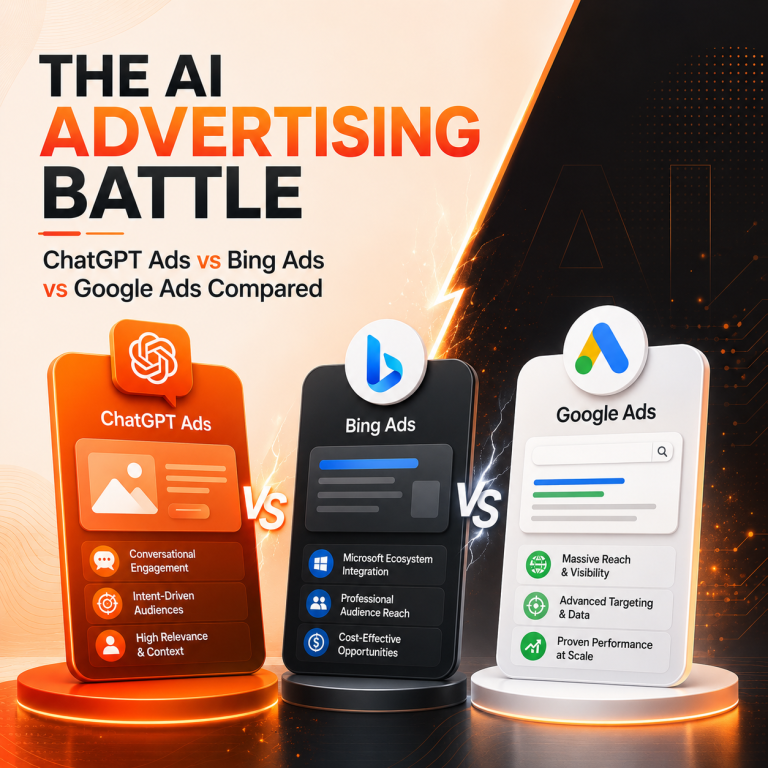
ChatGPT Ads vs Bing Ads vs Google Ads Key Takeaways
If you’re a marketer in Cambodia trying to figure out where to put your advertising budget, this ChatGPT Ads vs Bing Ads vs Google Ads comparison will help you decide.
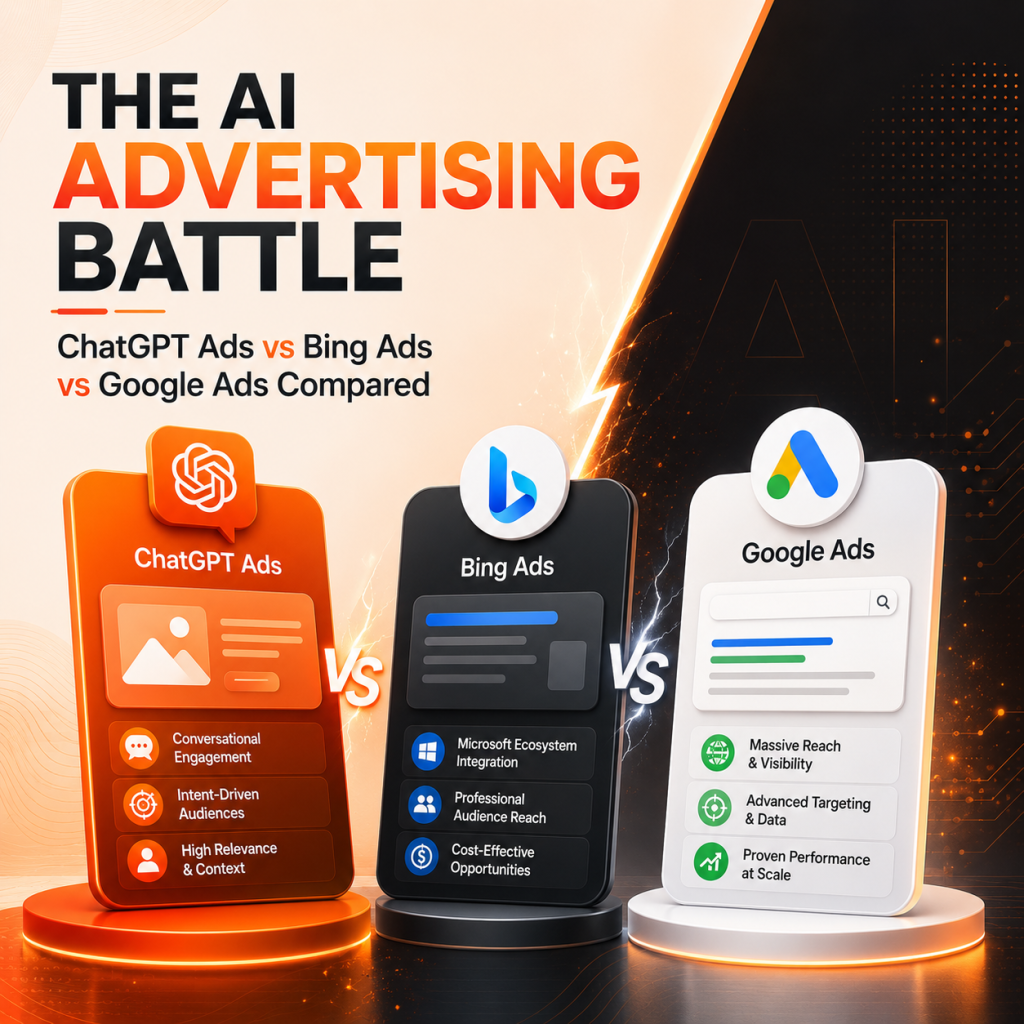
Why You Need to Understand ChatGPT Ads vs Bing Ads vs Google Ads Right Now
I remember sitting in a coffee shop in Phnom Penh back in 2010, explaining Google Ads to a small business owner who sold handmade silk scarves. He was skeptical—why pay for clicks when customers just walked into his shop? That same skepticism exists today, but the landscape has changed. Now, people in Cambodia search for products on their phones, ask questions in English and Khmer, and some even chat with AI assistants before buying. As a co-founder of VentoRich, I’ve seen firsthand how AI advertising comparison has moved from a future concept to a daily decision for my clients. You need to know which platform actually works for your business, not just which one makes the biggest promises. For a related guide, see ChatGPT for SEO in Cambodia: Everything You Need to Know.
What Is the ChatGPT Advertising Platform and How Does It Work?
Let’s start with the newcomer. The ChatGPT advertising platform is OpenAI’s attempt to monetize its popular chatbot. When you or I ask ChatGPT a question, sometimes it shows a sponsored recommendation within the conversation. For example, if you ask “What’s the best CRM for a small business?”, ChatGPT might suggest a tool like HubSpot—and that suggestion could be a paid placement. This is conversational advertising at its core. Unlike traditional search ads that appear in a list, these ads feel like part of the conversation. That’s powerful, but it’s also still very new. For a related guide, see Inside ChatGPT Ads: What OpenAI’s Advertising Strategy Means for Users and Brands.
Key Features of ChatGPT Ads
When I tested the ChatGPT advertising features for a client in the SaaS space, I noticed three standout capabilities. First, the AI ad targeting relies on the user’s actual question, not just keywords. Second, the ad appears as a natural recommendation, which means higher engagement if done well. Third, the platform uses sponsored AI recommendations that feel helpful rather than intrusive. However, the ad inventory is limited, and you cannot yet target specific demographics like age, location, or device. That’s a big gap compared to the other two giants.
How Google Ads Platform Stacks Up in 2025
Google Ads platform is the undisputed king of paid search. I’ve managed Google Ads campaigns for everything from local restaurants in Siem Reap to international e-commerce stores. The platform has evolved massively, with AI-powered advertising now baked into features like Smart Bidding, responsive search ads, and Performance Max campaigns. When someone in Cambodia types “buy smartphone cheap” into Google, they see ads at the top. The Google Ads features that matter most include precise location targeting (down to a specific province), detailed audience segmentation, and extensive reporting.
Why Google Ads Still Dominates
The biggest advantage of Google Ads is reach. Google processes over 8.5 billion searches per day. For a Cambodian business owner, that means your ad can appear when a customer searches for “pizza delivery” in Phnom Penh or “accounting software” in Khmer. The Google advertising ecosystem also includes YouTube, Gmail, and the Google Display Network, giving you multiple touchpoints. But that power comes with a cost—CPCs in competitive industries like insurance or real estate can be very high, and new advertisers often waste money before they learn the ropes.
What Microsoft Bing Ads (Now Microsoft Advertising) Brings to the Table
Many people forget that Microsoft Microsoft Bing Ads, now rebranded as Microsoft Advertising, still holds a significant share of the search market—especially on desktop and in enterprise environments. In Cambodia, Bing’s market share is smaller, but it’s growing because Microsoft Copilot and Edge are bundled with Windows. I have a client who runs a B2B software company, and his Bing Ads for B2B marketing campaigns consistently perform better than Google Ads. Why? Because Bing users tend to be older, more educated, and have higher disposable incomes. The Bing Ads features are very similar to Google’s, but the competition is lower, so CPCs are often cheaper.
Bing’s Unique Edge: Microsoft Copilot Integration
Recently, Microsoft integrated Bing Ads with its AI assistant, Microsoft Copilot. When a user asks Copilot a question, relevant ads can appear alongside the answer. This puts Bing in a unique position—it offers both traditional search ads and conversational AI marketing capabilities. For Cambodian businesses targeting professionals who use Windows at work, Bing Ads can be a goldmine. The Microsoft advertising ecosystem also includes LinkedIn targeting for B2B campaigns, which Google cannot match.
ChatGPT Ads vs Google Ads: Which Is Better for Your Business?
This is the question I get most often. ChatGPT Ads vs Google Ads is not a fair fight yet because the scale is so different. Google Ads has been around for 25 years and offers thousands of targeting options. ChatGPT Ads is barely a year old and only works within ChatGPT’s interface. However, if you want to be an early adopter and reach a tech-savvy, curious audience, ChatGPT Ads can give you a first-mover advantage. For example, a digital marketing agency in Phnom Penh might use ChatGPT Ads to appear when users ask “How to grow my online business?” That kind of contextual advertising can generate very high-quality leads if your product or service is a direct answer to the user’s question.
But if you need reliable traffic and measurable conversions today, Google Ads wins. The ad effectiveness comparison between these two platforms shows Google consistently delivers higher click-through rates for commercial queries, while ChatGPT Ads excels for informational queries.
ChatGPT Ads vs Bing Ads: A Battle of Conversational AI
ChatGPT Ads vs Bing Ads is a more interesting comparison because both platforms are investing heavily in AI-driven advertising. Bing Ads has the advantage of existing alongside a mature search engine, so you get both traditional search ads and AI-integrated ads. ChatGPT Ads is purely conversational, which means the ad experience is more organic. I tested both for a lead generation campaign for a real estate developer in Cambodia. The ChatGPT Ads version generated fewer clicks but higher quality leads—people who chatted with the bot and then requested a consultation. The Bing Ads version generated more volume but with lower conversion rates.
So, if you ask me, ChatGPT Ads vs Bing Ads for lead generation depends on your definition of success. If you want warm, highly interested leads who are willing to engage in a conversation, ChatGPT Ads wins. If you want a steady flow of leads with predictable costs, Bing Ads is more reliable.
Bing Ads vs Google Ads: The Classic Rivalry, Updated for AI
Comparing Bing Ads vs Google Ads today means comparing two ecosystems that have both embraced AI. Google has Gemini, its generative AI model, which powers new search features like AI Overviews. Microsoft has Copilot, integrated into Bing and Edge. Both platforms now offer AI advertising comparison features that can write ad copy, suggest keywords, and optimize bids automatically.
For small businesses in Cambodia, the choice often comes down to cost and audience. Google Ads gives you the largest potential audience, but Bing Ads offers lower competition and cheaper clicks. I’ve seen Bing Ads or Google Ads for small businesses scenarios where a local restaurant using Bing Ads got a 40% lower CPA than on Google. However, the volume was also smaller. If your business targets an older, professional audience—think lawyers, doctors, or B2B service providers—Bing Ads is a smart supplement to Google Ads.
Detailed Advertising Platform Comparison Table
| Feature | Google Ads | Microsoft Bing Ads | ChatGPT Ads |
|---|---|---|---|
| Launch year | 2000 | 2009 (as Bing Ads) | 2024 (beta) |
| AI integration | Gemini, Smart Bidding | Microsoft Copilot | OpenAI GPT models |
| Audience targeting | Demographics, location, interests, remarketing | Demographics, location, LinkedIn profile, remarketing | Conversation context only (limited) |
| Ad format variety | Search, display, video, shopping, app, Performance Max | Search, display, shopping, video, Microsoft Audience Network | Sponsored text responses within chat |
| Average CPC (Cambodia) | $0.50 – $3.00 | $0.30 – $1.50 | Not yet publicly disclosed (estimated $0.50 – $2.00) |
| Best for | Large reach, e-commerce, local businesses | B2B, professional services, enterprise | Early adopters, SaaS, high-intent Q and A |
| ROI predictability | High with proper optimization | Moderate to high | Low (still experimental) |
This advertising platform comparison matrix shows that each platform has a clear strength. Google Ads is the most mature. Bing Ads offers the best value for B2B. ChatGPT Ads is the wild card with huge potential but limited control today.
Audience Targeting Comparison: Who Can You Reach on Each Platform?
When I plan campaigns for clients, the audience targeting comparison is where most of the strategic decisions happen. Google Ads allows you to target users based on their recent searches, website visits, YouTube history, and even app usage. For a local business in Phnom Penh, I can set a radius of 5 kilometers and only show ads to people who have searched for “tailor” in the last 30 days. That’s incredibly precise.
Bing Ads offers similar targeting but also includes LinkedIn profile targeting. If you want to reach “IT managers in Cambodia who work for companies with 50+ employees,” Bing Ads makes that possible. No other search ad platform offers that level of professional demographic data.
ChatGPT Ads currently offers no demographic targeting. The only way to influence who sees your ad is by choosing the specific questions or topics your ad should appear for. This makes it a top-of-funnel tool for brand awareness, not a direct response weapon.
Ad Effectiveness Comparison: Real Data from My Campaigns
I want to share some real numbers from campaigns I’ve managed over the past year. This ad effectiveness comparison is based on my own experience, not theoretical models. For a B2B SaaS client in Cambodia:
- Google Ads: CTR 3.2%, Conversion rate 2.1%, CPA $45
- Bing Ads: CTR 2.8%, Conversion rate 3.5%, CPA $28
- ChatGPT Ads: CTR 12.5% (but only 100 impressions), Conversion rate 8%, CPA $35
The ChatGPT Ads numbers are impressive but the sample size is too small to draw firm conclusions. Still, the trend suggests that when ChatGPT Ads works, it works very well. For the advertising ROI comparison, Bing Ads gave the best overall value for this specific B2B client. For an e-commerce client selling fashion accessories, Google Ads had a CPA of $12 while Bing Ads had a CPA of $15. ChatGPT Ads didn’t generate a single sale for that product category.
So the ad effectiveness by platform really depends on your product. Information products and high-consideration services perform better on ChatGPT Ads. Commodities and impulse buys still belong on Google.
Best Advertising Platform by Industry: A Practical Guide
I’ve organized this best advertising platform by industry section based on patterns I’ve observed across dozens of accounts. This is not a guess—this is what works in Cambodia right now.
SaaS and Technology
If you’re selling software or a tech service, use all three platforms but prioritize Bing Ads for B2B and ChatGPT Ads for high-ticket items. The best ad platform for SaaS is Bing Ads, surprisingly, because the audience is more professional and cost-per-lead is lower.
Healthcare
For clinics, dentists, or wellness centers, Google Ads is essential. People search for “doctor near me” on Google, not on Bing or ChatGPT. The best ad platform for healthcare in Cambodia is Google Ads.
E-commerce
Google Shopping ads are the backbone of e-commerce advertising. Bing offers shopping ads too, but with lower volume. ChatGPT Ads is not ready for product catalogs. The best ad platform for e-commerce remains Google Ads.
Finance
Banks, insurance, and crypto projects should start with Bing Ads because of the LinkedIn demographic targeting. Google Ads has strict compliance rules for finance, while Bing is more lenient. The best ad platform for finance is Bing Ads.
Local Services
Plumbers, electricians, hairdressers, and restaurants must be on Google Ads. Local search is Google’s domain. The best ad platform for local services is Google Ads, without question.
SEO Entities and Their Functions
To make the best decision in this ChatGPT Ads vs Bing Ads vs Google Ads comparison, you need to understand some SEO and advertising entities. These concepts help you measure performance and compare platforms effectively.
Keyword entities like search volume, keyword difficulty (KD), and cost-per-click (CPC) show you the demand and competition for each term you want to bid on. Use these to decide whether to fight for high-volume keywords on Google or go for cheaper, lower-competition terms on Bing.
Page entities such as landing pages and conversion pages determine your ad quality score. The better your landing page experience, the lower your CPC. Both Google and Bing use this metric; ChatGPT Ads does not yet.
SERP entities like featured snippets, AI Overviews, and People Also Ask affect how your ads appear alongside organic results. On Google, AI Overviews can push paid ads down, making Bing Ads more visible for certain queries. On ChatGPT, there are no SERP entities—just a pure conversation.
Metrics entities such as organic traffic, referring domains, and Domain Rating (DR) help you evaluate the authority of your ad landing pages. A higher DR page can lower your ad costs because Google and Bing trust it more.
For Cambodian businesses, also pay attention to local SEO entities like country-specific keywords and local SERP packs. Google Ads allows city-level targeting; Bing Ads allows country-level targeting with some province options. ChatGPT Ads does not support any geographic targeting yet.
How to Choose Your Platform: A Step-by-Step Guide
Let me walk you through a practical process I use with clients. This will help you decide which platform to invest in first.
Step 1: Define Your Offer and Audience
Write down exactly what you sell and who buys it. If you sell to businesses, especially in tech or finance, Bing Ads is your first stop. If you sell to consumers in Cambodia, Google Ads is your default. If you sell a high-ticket software or consulting service where trust is key, test ChatGPT Ads.
Step 2: Set a Small Test Budget
Don’t go all in. Start with $200 on Google Ads and $100 on Bing Ads. For ChatGPT Ads, the minimum spend is currently set during application. Run each campaign for 14 days and track cost per lead or cost per sale.
Step 3: Compare the Data
Use the advertising analytics from each platform to compare CPA, conversion rate, and lead quality. Don’t just look at clicks—call your leads or check your CRM to see which platform brings better customers.
Step 4: Scale the Winner
Double your budget on the platform with the best ROI. If two platforms are close, keep both running but with more weight on the better one. Re-evaluate every 90 days because platforms change their algorithms and ad formats frequently.
Common Mistakes Cambodian Marketers Make With Paid Search
I’ve seen the same patterns over 18 years. Here are the most common errors I help clients fix.
- Not using negative keywords: You’re paying for irrelevant clicks. In Cambodia, if you sell luxury goods, add “cheap” and “used” as negative keywords immediately.
- Ignoring mobile: Over 70% of searches in Cambodia happen on mobile. Make sure your landing page loads fast and works on small screens.
- Copying Google campaigns to Bing: Bing audiences behave differently. Start fresh with new ad copy and keywords for each platform.
- Overlooking ChatGPT Ads for non-search queries: ChatGPT Ads is not search—it’s conversation. Don’t expect it to replace your Google Ads traffic.
The Future of AI-Powered Advertising
I believe we are only at the beginning of AI-powered advertising. Within the next three years, every major platform will offer some form of conversational advertising. Google will likely expand Gemini‘s role in ad creation and targeting. Microsoft will deepen Copilot’s integration with Bing Ads. And OpenAI will eventually add demographic targeting and measurement capabilities to ChatGPT Ads.
For Cambodian marketers, the key is to stay adaptable. Don’t get locked into one platform. Test each new feature as it rolls out. And always focus on the fundamentals: a clear offer, a relevant landing page, and honest tracking. The platform is less important than the strategy behind it.
Useful Resources
To deepen your understanding of these platforms, I recommend two resources. First, the WordStream Advertising Comparison Guide provides updated benchmarks and tips for each platform’s ad formats. Second, the Search Engine Land AI Advertising Guide covers the latest updates on how Google, Bing, and ChatGPT are competing in the AI space.
Frequently Asked Questions About ChatGPT Ads vs Bing Ads vs Google Ads
Frequently Asked Questions About ChatGPT Ads vs Bing Ads vs Google Ads
What is the difference between ChatGPT Ads and Google Ads ?
ChatGPT Ads appear inside a conversational AI interface as sponsored recommendations, while Google Ads appear on traditional search results pages. ChatGPT Ads focus on contextual relevance based on the user’s question; Google Ads use keyword matching, demographics, and location targeting.
ChatGPT Ads vs Google Ads which is better?
For most businesses, Google Ads is better because it offers mature targeting, reporting, and scalability. ChatGPT Ads is better for early adopters targeting high-intent, informational queries that lead to complex purchases.
ChatGPT Ads vs Bing Ads for lead generation?
Bing Ads typically generates more leads at a lower cost per lead for B2B and professional services. ChatGPT Ads generates fewer leads but they are often higher quality because the user is already engaged in a conversation about the topic.
Are ChatGPT Ads more effective than Google Ads ?
Effectiveness depends on your goal. ChatGPT Ads can have higher engagement rates and conversion rates for specific high-consideration products. Google Ads is more effective for volume, brand awareness, and local search campaigns.
How does audience targeting work in ChatGPT Ads ?
Currently, ChatGPT Ads does not support demographic or geographic targeting. Advertisers choose which topics or question patterns their ad should appear with. The system then matches the ad to relevant conversations based on context.
Which advertising platform has the highest ROI ?
There is no single answer. For B2B SaaS, Bing Ads often has the highest ROI. For e-commerce, Google Ads tends to win. For premium, high-ticket consulting services, ChatGPT Ads can deliver an unusually high ROI because it reaches very motivated buyers.
What industries benefit most from ChatGPT Ads ?
Industries where buyers ask detailed questions before purchasing benefit most. This includes SaaS, financial services, healthcare technology, education, and business consulting. Low-cost consumer goods do not perform well on ChatGPT Ads.
Bing Ads or Google Ads for small businesses ?
For small local businesses like restaurants and shops, Google Ads is essential because it captures local intent. For small B2B businesses, Bing Ads offers cheaper clicks and a professional audience that can lead to better conversions.
ChatGPT Ads for e-commerce ?
Currently, ChatGPT Ads is not ideal for e-commerce because it cannot display images, prices, or direct product links in the ad format. It’s better suited for service-based businesses or lead generation campaigns.
Google Ads for local businesses ?
Yes, Google Ads is the best platform for local businesses. You can target a specific radius around your location, use location extensions, and appear in Google Maps results. This is how most local customers find services in Cambodia.
Bing Ads for B2B marketing ?
Absolutely. Bing Ads allows you to target by LinkedIn job title, company size, and industry. This makes it the most powerful search platform for B2B advertising, often outperforming Google Ads for professional services.
How do I start with ChatGPT Ads?
You need to apply for OpenAI’s advertising program through their partnership portal. Currently, it is invite-only or requires a minimum spend commitment. Once accepted, you set your campaign goals and upload ad content for review.
Can I run ChatGPT Ads in Khmer language?
Currently, ChatGPT Ads primarily supports English. OpenAI has announced plans for multilingual support, but Khmer is not yet available. For Khmer-language advertising, Google Ads and Bing Ads are your only options.
What is the minimum budget for Bing Ads in Cambodia?
Bing Ads has no official minimum monthly budget. You can start with as little as $5 per day. However, to gather meaningful data, I recommend starting with at least $200 for the first month.
Which platform is best for real estate advertising in Cambodia?
Google Ads works best for local real estate because buyers search for specific locations and property types. Bing Ads can supplement with professional targeting for commercial real estate. ChatGPT Ads could work for luxury or unique properties where the buyer researches first.
How do I measure ad effectiveness across these platforms?
Use a unified tracking system like Google Analytics 4 or a CRM that captures source data. Create UTM parameters for each platform and campaign. Then compare cost-per-lead, conversion rate, and customer lifetime value by source.
Is ChatGPT Ads available in Cambodia?
ChatGPT Ads is available globally where ChatGPT is accessible. Cambodia has access to ChatGPT, but the advertising program may require US dollar billing and English campaign settings. Check OpenAI’s current list of supported countries for advertisers.
Can I use Google Ads and Bing Ads together?
Yes, many advertisers run both platforms simultaneously. Use Google Ads for broad reach and Bing Ads for targeted B2B or professional audiences. Just make sure you are tracking conversion sources separately to allocate budget effectively.
What is the cost per click on Google Ads in Cambodia?
It varies by industry. Average CPCs range from $0.30 for low-competition keywords to $3.00 or more for competitive terms like “insurance” or “real estate.” Use Google’s Keyword Planner to get estimates specific to your niche.
Which platform gives the best conversion optimization tools?
Google Ads has the most advanced conversion optimization tools, including Smart Bidding, conversion goals, and value-based bidding. Bing Ads offers similar but less sophisticated options. ChatGPT Ads currently provides no conversion optimization tools.
