
ChatGPT Ads vs Google Ads Key Takeaways
If you are a marketer in Cambodia wondering whether to put your budget into ChatGPT Ads vs Google Ads , here is what you need to know: Google Ads is still the king of intent-based search, while ChatGPT Ads represents a new frontier in conversational advertising where brands get recommended inside AI chats.
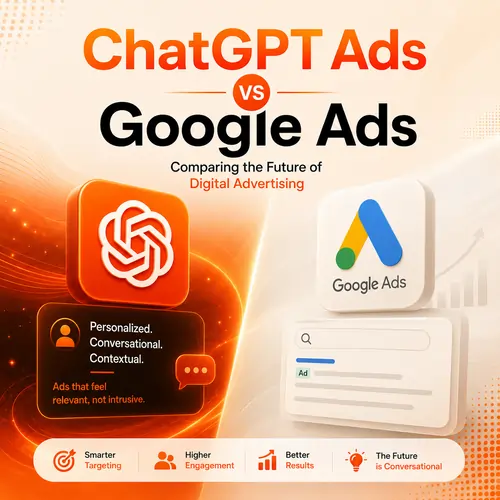
What Readers Should Know About ChatGPT Ads vs Google Ads
I have been in digital marketing since 2008, back when people still argued whether Facebook ads would kill Google. Now the debate has shifted to something bigger: ChatGPT Ads vs Google Ads. I am Me Jin Grey, co-founder of VentoRich, and I have spent the last 18 years helping brands navigate exactly these kinds of shifts. Today, I want to break down this comparison in plain language — especially for readers in Cambodia who may be hearing about AI ads for the first time.
Here is the truth: Google Ads is a mature, predictable machine. You bid on keywords, you show up in search results, and you pay per click. ChatGPT Ads is newer and more experimental. Instead of search results, your ad appears inside a conversation when a user asks ChatGPT a relevant question. Think of it like having a friendly shop assistant recommend your product instead of a billboard on the highway. For a related guide, see Inside ChatGPT Ads: What OpenAI’s Advertising Strategy Means for Users and Brands.
In this article, I will walk you through ChatGPT Ads explained and Google Ads explained from the ground up. I will compare costs, targeting, and ROI. By the end, you will know which platform deserves your next dollar.
How Google Ads Works: The Machine You Already Know
If you have ever searched for “ទិញស្បែកជើងក្នុងផ្សារអនឡាញ” and seen sponsored results at the top, you have experienced Google Ads explained in action. Google Ads is a pay-per-click (PPC) platform. You choose keywords, write ads, and bid on how much you are willing to pay each time someone clicks. Your ad appears when someone searches for those keywords.
The Google Ads Platform in a Nutshell
Google processes over 8.5 billion searches per day. Its ad system matches your ad to user intent. If I search for “cheap hotel in Siem Reap,” Google shows me hotel ads because it knows I am ready to book. This is called intent-based advertising, and it is incredibly powerful.
Google Ads targeting capabilities include keywords, location, device, time of day, audience demographics, and even past purchase behavior. You can laser-focus your budget on people who are likely to buy right now.
Google Ads CPC and Google Ads ROI
In Cambodia, average Google Ads CPC ranges from $0.10 to $1.50 depending on the industry. Competitive niches like insurance or real estate can cost $5–$10 per click. Google Ads ROI is measurable: you can track every click to a sale. Most businesses see a 200-400% return if campaigns are well managed.
I have personally managed Google Ads for businesses that were spending $500 per month and generating $3,000 in revenue. That is a 6x return. But the platform demands constant optimization. Keyword lists need pruning, ad copy needs refreshing, and landing pages must convert.
How ChatGPT Ads Works: Advertising Inside the Conversation
Now let us talk about the new kid on the block. ChatGPT Ads explained simply: instead of interrupting a search, your brand appears as a sponsored recommendation inside a ChatGPT conversation. Imagine a user asks ChatGPT: “What is the best laptop for graphic design under $1,000?” ChatGPT might respond with a list of recommendations that includes a sponsored result from, say, Dell or ASUS.
The ChatGPT Advertising Platform and Its Philosophy
OpenAI calls this sponsored AI responses. The ad is woven into the answer, marked clearly as sponsored, but it feels natural. This is conversational advertising at its core. The user is not searching; they are asking. The AI acts like a knowledgeable friend who happens to mention your product.
ChatGPT Ads targeting capabilities are still evolving. Currently, advertisers can target by conversation topic, user location, and broad intent categories. You cannot bid on exact keywords the way you do in Google Ads. Instead, you tell OpenAI: “I want my ad to appear when someone asks about travel planning in Southeast Asia.”
ChatGPT Ads CPC and ChatGPT Ads ROI
Pricing for ChatGPT Ads is not yet public in detail, but early reports suggest a cost-per-engagement model. You pay when a user clicks or interacts with your sponsored recommendation. ChatGPT Ads CPC may be higher than Google’s average because the audience is more engaged — they are already deep in a conversation.
ChatGPT Ads ROI is harder to track right now. OpenAI is building analytics, but it is not as mature as Google’s. Early adopters report click-through rates of 5-10%, which is excellent compared to Google’s 2-3% average. However, conversion tracking still requires custom setup.
Side-by-Side ChatGPT Ads vs Google Ads comparison
Let me put the two platforms next to each other so you can see the differences clearly.
| Feature | Google Ads | ChatGPT Ads |
|---|---|---|
| Ad Placement | Search results, YouTube, Gmail, Display Network | Inside ChatGPT conversations |
| User Intent | High — user is searching for something specific | Medium — user is exploring or asking for recommendations |
| Targeting | Keywords, demographics, location, device, audience lists | Conversation topics, broad intent, location |
| Average CPC | $0.10–$5.00 (varies by industry) | Estimated $0.50–$3.00 (early data) |
| Click-Through Rate | 2-3% average | 5-10% reported by early testers |
| ROI Tracking | Advanced — Google Analytics, conversion tracking, offline imports | Early stage — basic analytics, manual setup needed |
| Best For | Direct response, e-commerce, local businesses | Brand awareness, product discovery, consideration stage |
As you can see, the advertising platform comparison reveals trade-offs. Google gives you precision and control. ChatGPT gives you context and conversation.
Strengths and Weaknesses: ChatGPT Ads vs Google Ads from a Cambodian Perspective
I want to talk about this in a way that makes sense for someone running a shop in Phnom Penh or selling services in Battambang. I will use examples you can relate to.
Google Ads strengths and weaknesses
Google Ads is reliable. You can set a budget of $200 per month, target Siem Reap province, and get calls from tourists looking for a tour guide. The tracking is excellent — you know exactly where every riel went. The downside? Competition is fierce. If you sell the same thing as ten other businesses, your cost per click goes up. Google also keeps changing its algorithms, which can hurt your quality score overnight.
ChatGPT Ads strengths and weaknesses
ChatGPT Ads is exciting because it feels less like an ad. When a user asks “Where can I buy organic coffee in Cambodia?” and ChatGPT recommends your brand, that recommendation carries trust. The weakness is scale. ChatGPT does not yet have the reach of Google. In Cambodia, ChatGPT usage is growing, but it is still a fraction of Google’s audience. Also, you cannot target as precisely — yet.
AI Advertising vs Search Advertising: Which One Wins?
I often get asked: “Is this the end of search advertising?” Not at all. AI advertising vs search advertising is not a war. It is an evolution. Think of it this way: Google answers “what” and “where” — users search for a product and find it. ChatGPT answers “which” and “why” — users ask for advice and get recommendations.
AI search advertising is where these two worlds blend. Google is already testing AI Overviews in search results. ChatGPT is integrating web search. The future is hybrid. You will need both AI-powered advertising and traditional search ads to cover the full funnel.
What About Answer Engine Optimization and AEO vs SEO?
If you are putting money into ChatGPT Ads, you also need to understand answer engine optimization (AEO). This is the practice of structuring your content so that AI chatbots choose it as the best answer. Unlike SEO, which optimizes for Google’s ranking algorithm, AEO optimizes for AI-generated summaries and recommendations.
AEO vs SEO is not an either/or. A good strategy uses both. For example, you can run Google search advertising to capture immediate searches, while also building content that gets recommended inside ChatGPT through sponsored AI responses.
ROI Deep Dive: ChatGPT Ads ROI vs Google Ads ROI
Let me share some real numbers from my experience and industry benchmarks.
| Metric | Google Ads | ChatGPT Ads |
|---|---|---|
| Average Conversion Rate | 2.35% (all industries) | 3-5% (early reports) |
| Cost per Acquisition | $20–$200 depending on niche | $15–$150 (estimated) |
| Time to See Results | 1–2 weeks | 4–8 weeks (building awareness) |
| Attribution Difficulty | Low — direct clicks | Medium — assisted conversions |
In my work at VentoRich, I have seen clients achieve Google Ads ROI of 3x to 5x in the first month. ChatGPT Ads ROI tends to start lower but grows over time because the conversational nature builds brand recall. If someone asks ChatGPT a question and sees your brand mentioned, they may not click immediately, but they remember you when they search on Google later.
Future of Digital Advertising: Where Are We Headed?
I believe the future of digital advertising is AI-native advertising. That means ads are not bolted onto content — they are part of the experience. Conversational commerce is already here: people buy things through WhatsApp, Facebook Messenger, and now ChatGPT. The next step is ads that feel like helpful recommendations rather than interruptions.
Generative AI marketing will also change how ads are created. Instead of writing five headlines and testing them, you will give an AI a brand brief and let it generate hundreds of variations personalized to each user. OpenAI’s OpenAI advertising strategy seems to be building toward this: a platform where the AI itself helps you create and place ads inside conversations.
AI Marketing Trends to Watch in 2026
- Sponsored AI responses will become a standard format on multiple AI platforms, not just ChatGPT.
- Contextual advertising will make a comeback — ads placed based on the meaning of a conversation rather than user history.
- AI recommendation systems will replace keyword-based targeting for many use cases.
- AI-driven customer acquisition will rely on predictive models that identify high-intent users before they search.
Which Platform Should You Choose: Best Advertising Platform for Brands?
I cannot tell you there is one winner. The best advertising platform for brands depends on your goals. Let me give you a simple framework.
Choose Google Ads for businesses if:
- You need sales this week, not next month.
- You sell products with clear search intent (e.g., “buy running shoes Phnom Penh”).
- You want full control over targeting and budget.
- You need detailed analytics to prove ROI to your boss or client.
Choose ChatGPT Ads for businesses if:
- You want to build brand awareness in a trusted context.
- Your product or service needs explanation (e.g., SaaS, consulting, health products).
- You want to experiment with AI search marketing and be an early mover.
- Your audience includes tech-savvy users who rely on ChatGPT for recommendations.
In Cambodia, I recommend starting with Google Ads if you have a limited budget. It is proven. But set aside 10-20% of your ad spend to test ChatGPT Ads. Learn how conversational ads work now, so when the platform matures, you are ready.
Advertiser Opportunities in ChatGPT: Early Mover Advantage
One thing I love about advertiser opportunities in ChatGPT is the lack of competition. Right now, very few brands in Cambodia are advertising on ChatGPT. That means lower costs and higher visibility. As more advertisers join, prices will rise. If you test ChatGPT Ads today, you can gather data and refine your approach before the crowd arrives.
I also see huge potential for AI-powered brand discovery. When a user asks ChatGPT “សូមណែនាំហាងលក់សំលៀកបំពាក់ល្អនៅភ្នំពេញ” and your brand appears, that user perceives you as the expert, not as an advertiser. That trust is gold.
Useful Resources
If you want to dive deeper into these platforms, here are two resources I recommend:
- Google Ads official documentation — Start here to understand campaign types, bidding, and measurement.
- OpenAI enterprise and advertising details — Learn about ChatGPT Ads availability and partnership opportunities.
Frequently Asked Questions About ChatGPT Ads vs Google Ads
I hope this detailed walkthrough of ChatGPT Ads vs Google Ads helped you see the landscape more clearly. If you have questions about which platform fits your specific business in Cambodia — or anywhere else — drop them in the comments. I read every one. Let us keep learning together as this space evolves.
Frequently Asked Questions About ChatGPT Ads vs Google Ads
What is the main difference between ChatGPT Ads and Google Ads?
Google Ads shows your ad when someone searches for a keyword. ChatGPT Ads shows your brand as a sponsored recommendation inside a conversation. Google captures active intent; ChatGPT captures exploratory intent.
Which is better ChatGPT Ads or Google Ads for my business?
It depends on your goal. If you need immediate sales from people ready to buy, start with Google Ads. If you want to build trust and get recommended in conversations, test ChatGPT Ads.
How do ChatGPT Ads work in simple terms?
When a user asks ChatGPT a question, the AI can include a sponsored brand or product in its answer. The ad is labeled as sponsored, but it feels like a natural suggestion.
How do Google Ads work in simple terms?
You choose keywords related to your business, write an ad, and bid on how much you will pay per click. When someone searches for those keywords, your ad appears at the top of the results.
Are ChatGPT Ads more effective than Google Ads?
Effectiveness depends on your metric. ChatGPT Ads often have higher click-through rates because the ad is more contextual. Google Ads usually have higher conversion rates because the user already wants to buy.
What are ChatGPT Ads targeting options?
Currently, you can target by conversation topic, broad intent, and location. OpenAI is developing more granular options like user behavior and demographic targeting.
What is the ROI of ChatGPT Ads compared to Google Ads?
Google Ads ROI is easier to measure and often 3x-5x initial spend. ChatGPT Ads ROI is harder to track but can deliver strong brand lift and assisted conversions over time.
How does Google Ads targeting compare to ChatGPT Ads?
Google Ads offers precise keyword, demographic, location, and audience targeting. ChatGPT Ads targeting is broader — you aim at conversation topics rather than specific queries.
Can ChatGPT Ads replace Google Ads?
Not yet. ChatGPT Ads are complementary, not a replacement. Most businesses benefit from using both platforms to cover different stages of the customer journey.
Are AI ads the future of digital marketing?
Yes, AI-powered ads are growing fast. They will not replace traditional search ads entirely, but they will become a standard part of the marketing mix for most brands.
What is the cost of ChatGPT Ads pricing?
OpenAI has not published official pricing. Early reports suggest a cost-per-engagement model similar to CPC. Estimates range from $0.50 to $3.00 per interaction.
What is Google Ads pricing?
Google Ads uses a bidding system. You set a maximum bid per click. Costs vary by industry, from $0.10 for low-competition keywords to $10+ for high-competition ones.
How can Khmer businesses use ChatGPT Ads?
Khmer businesses can target conversations about topics relevant to their products, like travel, food, or local services. It is especially useful for brands that want to be recommended to tourists or expats.
Does Google Ads work well in Cambodia?
Yes. Google is the dominant search engine in Cambodia. Local businesses like restaurants, hotels, and shops get good results with locally targeted campaigns. For a related guide, see How to Use ChatGPT for Local SEO in Cambodia.
What is conversational advertising ?
Conversational advertising is when a brand appears inside a chat or dialogue, not as a separate ad. ChatGPT Ads are a prime example — they feel like part of the conversation.
What is AEO vs SEO ?
SEO optimizes content for search engines like Google. AEO (Answer Engine Optimization) optimizes content to be chosen as the best answer by AI chatbots like ChatGPT.
How do I start with ChatGPT Ads?
Visit the OpenAI enterprise page and request early access. You can also work with a partner agency like VentoRich that specializes in AI advertising.
What is the future of AI advertising in Cambodia?
As internet access improves and AI tools become more popular, Cambodia will see more opportunity in AI-powered advertising. Early adopters will have a competitive edge.
Can ChatGPT Ads help with brand awareness?
Absolutely. Being recommended inside a trusted AI conversation builds brand recall and credibility, especially among tech-savvy and global audiences.
What should I do next — Google Ads or ChatGPT Ads?
Start with Google Ads if you need quick, measurable results. Add ChatGPT Ads as an experiment to learn how conversational marketing works. Use both for a balanced strategy.
